The Battle of Polytopia
- 4.4
- Rating
- 10.00M
- Installs
- Free
- Price

 Analysis by App-foxy
I spent time with The Battle of Polytopia as a compact strategy game, and its appeal became clear very quickly: it gives me the familiar shape of a civilization game, then compresses the important decisions into short, readable turns. I can explore, develop a small empire, choose technologies, and fight for control without needing an entire evening for one session. That makes it easy to recommend to someone who enjoys thoughtful games but does not want a complicated interface or a huge campaign to manage.
It is developed by Midjiwan AB and sits in the strategy category. The game is free to start, carries an Everyone 10+ age rating, and has reached over 10 million installs. Its average rating is 4.4 from around 236 thousand ratings, which matches my impression that it has found a strong audience among mobile players who want more substance than a quick arcade match.
How the small-map strategy loop works
The basic workflow is simple enough to understand after a few turns. I begin with a tribe, send units into the unknown, collect resources, improve settlements, research technologies, and try to turn a modest starting position into a winning civilization. Every turn asks me to decide what deserves attention first: discovering more territory, strengthening the economy, unlocking a useful unit, or preparing for a nearby rival.
You May Also Like

 Blood Strike: 2.5 Anniversary
Blood Strike’s Loadouts Turn Every Drop Into a Tactical Gamble
A close look at Blood Strike’s custom loadouts: how fast access to signature weapons reshapes its battle royale rhythm, rewards preparation, and narrows the gap between fights.

 Pandora - Music & Podcasts
Pandora’s Music Is Easy to Start, but Harder to Recover
Pandora’s strength is its low-effort path from a seed to a station. Its weak spot is how much confidence it asks you to place in connection, setup, and quiet recovery.

 8 Ball Pool
 Is Built on Rivalries, Rematches, and Routine
A close look at the rivalries, rematches, shared routines, and unanswered safety questions that turn a quick pool match into a persistent mobile community.

 Samsung Music
’s Quiet Strength Is Playing What You Already Own
Its reach comes less from spectacle than from dependable access to a personal library. That simplicity is both the app’s strongest retention engine and its ceiling.

 AccuWeather: Weather Radar
AccuWeather Review: A Quick, Clear Forecast for Everyday Decisions
For everyday plans, the best forecast is the one you can understand quickly. AccuWeather makes rain timing, radar, and local conditions easy to act on, with a few trade-offs.

 Hill Climb Racing
Why Hill Climb Racing Still Turns Crashes Into One More Run
A tiny car, a bumpy hill and one more upgrade: Hill Climb Racing keeps resurfacing because its simple chaos makes every near-miss feel personal.
More From Our News Desk



That order matters more than it first appears. Spending everything on expansion can leave a city unable to support a useful army, while researching too broadly can delay the one technology that would solve an immediate problem. I learned to look at the next two or three turns rather than treating each turn as an isolated move. If a city is close to gaining a population point, for example, I prefer to plan around the reward I will receive instead of making a random improvement just because resources are available.
The map is deliberately compact, but it does not feel empty. Land, water, villages, resources, and rival tribes create a puzzle in which movement and timing are closely connected. A unit that explores too far can become difficult to protect. A city placed in a useful position can become the foundation of an entire route across the map. I often find that the first few turns decide the character of the match, even though the final battle may come much later.
The most useful beginner habit is to treat exploration as an investment rather than a side activity. An explorer reveals villages, identifies threats, and shows which technologies are likely to matter. I try not to send every unit in the same direction. Splitting attention gives me a better view of the map, but spreading units too widely can also make them easy targets. The right balance depends on whether I am racing for territory or expecting an early confrontation.
Combat is easy to read but not careless. A unit’s position, movement range, attack opportunity, and the condition of nearby cities all affect whether an assault is sensible. I had several matches where I technically could attack but chose not to, because the enemy would retaliate immediately or because moving forward would expose a more valuable unit. This is where the game feels more like a board game than a conventional mobile time sink: the interface is light, but the consequences of a small mistake can last for many turns.
The ordinary match rhythm also makes the game suitable for real everyday use. I can play a few turns while waiting for an appointment, stop without losing the thread, and return later with a clear objective. It does not demand the constant attention of a real-time strategy game. At the same time, I would not call it mindless. If I am tired and start tapping through turns without checking the map, I usually create problems for myself.
Settings and presentation that help during a match
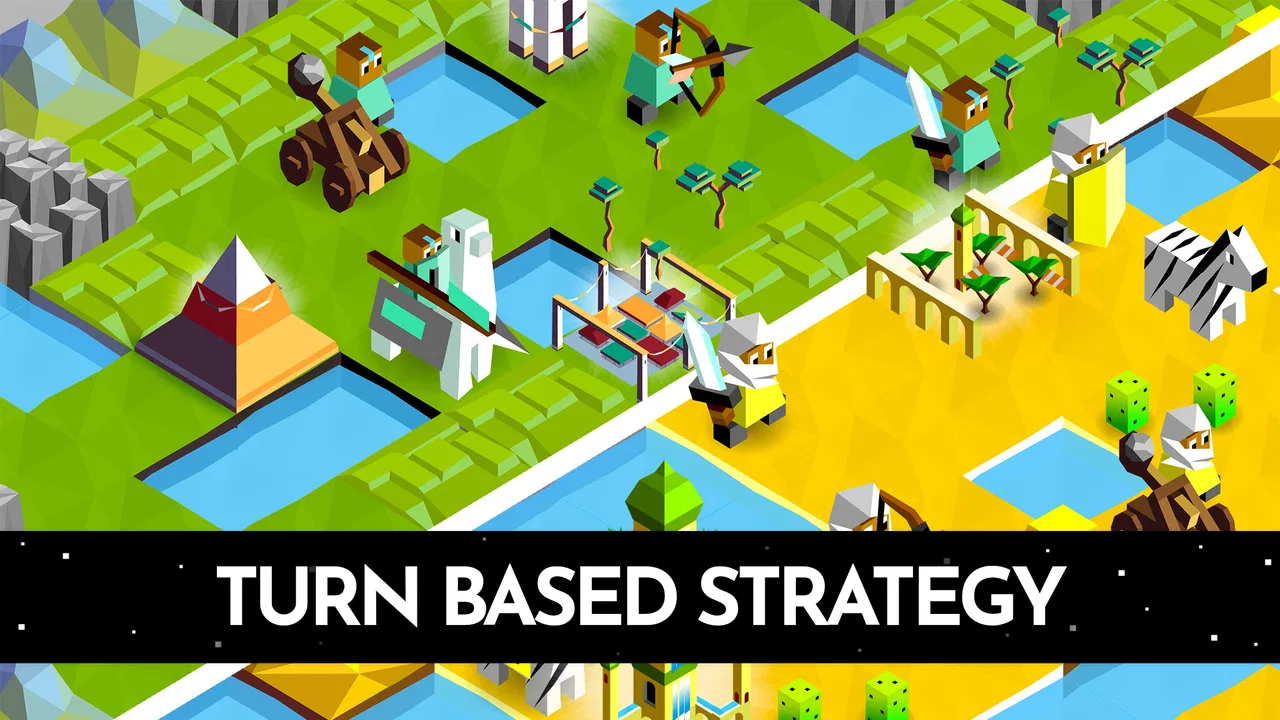
The game’s clean presentation is one of its strongest practical qualities. Units and terrain are recognizable without the screen becoming crowded, and the turn-based format gives me time to inspect the board before committing. I recommend checking the available settings before starting a serious match, especially sound and notification preferences, so the game fits the way you plan to play it. Someone using it in short public sessions may want a quieter setup, while a player at home may prefer the extra audio feedback.
I also make a point of checking display and control preferences after installing an update. The current version is 2.16.8.15757, and mobile games can feel slightly different after updates even when their central rules remain familiar. A quick look at the interface before beginning a long match prevents avoidable confusion, particularly if you switch between phones or play on both Android and iOS.
There is no advantage in rushing through the menus simply because the game looks simple. I use the opening screen to decide whether I want a relaxed match or a more demanding one, then choose the mode and setup that match my available time. A smaller, more direct game is better when I have only a few minutes, while a larger contest gives exploration and diplomacy-like positioning more room to develop. The important point is to choose deliberately rather than expecting every map to provide the same experience.
Sound is not essential to understanding the game, but it can make turns feel more deliberate. I sometimes leave it on when playing alone because movement and combat feel more satisfying with feedback. When I am playing in a shared space, I turn it down and rely on the visuals. The game remains perfectly playable that way, which is useful for a title designed around short mobile sessions.
One setting-related trade-off is that a clean interface can encourage overconfidence. Because the board is readable, I may assume I have seen everything important. Experienced play requires slowing down and checking the edges of the map, unoccupied villages, and the routes an opponent could use on the next turn. No setting replaces that inspection. The best configuration is the one that removes distractions while leaving me focused on the board.
Repeatable patterns that make turns faster
After several matches, I settled into a repeatable turn routine. I first check threats and possible captures, then review cities, available research, and unit movement. Only after that do I spend resources. This order prevents a common mistake: improving a city or moving a unit, then discovering that the resource should have been saved for a more urgent action.
I also avoid ending a turn immediately after my most obvious move. Before confirming the turn, I scan for units that still have useful work to do, including safe exploration, repositioning, or a defensive move. This sounds minor, but it saves me from wasting turns with units left idle. It also helps reveal whether one action has opened a route for an opponent.
A second useful pattern is to give each city a role. Some settlements are better suited to supporting growth, while others are more valuable because of their position near a frontier or a route through the map. I do not try to make every city perform identically. When I specialize my attention, I make fewer wasteful improvements and can respond more clearly to the overall shape of the match.
Research deserves the same discipline. I used to select technologies because they looked generally useful, but that often left me with several half-developed plans. Now I ask what problem I am solving: lack of movement, weak defense, poor access to territory, or insufficient growth. The best technology is not always the strongest one in isolation; it is the one that turns my current position into a better position soon enough to matter.
When an opponent is nearby, I try to keep a reserve rather than committing every unit to the front line. A unit that appears idle can protect a city, block a route, or punish an overextended enemy. This is one of the game’s less obvious lessons. Progress is not always represented by moving forward. Sometimes the strongest turn is the one in which I improve my position without giving the opponent an easy target.
For players who want to improve quickly, I suggest reviewing the reason behind each lost match instead of simply starting another one. Was the opening too slow? Did I spend resources before checking the map? Did I attack because a target was available rather than because the attack improved my position? These questions are more useful than memorizing a single opening, because the map and starting situation can change the value of every early decision.
Where the strategy becomes demanding
The compact format hides a surprisingly sharp ceiling. Early turns are welcoming, but experienced opponents can punish inefficient movement, poor city placement, and careless timing. A player who only reacts to visible attacks may fall behind before the battle appears serious. The stronger approach is to read likely intentions from movement and territory: a unit heading toward a narrow passage may be scouting, threatening, or preparing to cut off expansion.
That said, the game does not offer the same depth as a large desktop civilization simulator. The smaller scale is the reason it works so well on a phone, but it also limits how much long-term management I can do. Players who want detailed diplomacy, sprawling economies, extensive city administration, or a lengthy historical campaign may find this experience too focused. A full-scale 4X game is the better choice when the pleasure comes from managing a large world over many hours.
It also differs from typical real-time strategy games. I never have to compete with an opponent’s actions second by second, so the pressure is more about evaluation than reflexes. That makes it friendlier to newcomers and more comfortable on a touchscreen. On the other hand, anyone who enjoys rapid unit control and constant action may find the turn structure too restrained.
The free entry point is helpful, but I still recommend treating optional purchases thoughtfully. Individual in-app purchases range from $0.99 to $4.49, so the game can be tried without paying, while players who want more content can decide for themselves whether an addition is worthwhile. I would not spend simply because I lost a match. First I would make sure the problem was not an opening mistake or a weak decision pattern that extra content would not fix.
Another limitation is the emotional effect of short matches. Because a game can feel manageable, I may start another immediately after a defeat, then repeat the same mistake while trying to recover. Taking a short break is genuinely useful. The next match becomes more informative when I return with a specific adjustment in mind, such as expanding more cautiously or preserving a defensive unit.
The Everyone 10+ rating makes it broadly approachable, but approachability should not be confused with simplicity. Younger players can learn the controls quickly, yet the deeper lessons involve planning, restraint, and recognizing delayed consequences. I would happily introduce it to a family member who enjoys board games, provided they are comfortable losing while learning instead of expecting every match to be immediately fair or predictable.
Who should install it and who should pass
I think this is a particularly good fit for people who enjoy strategy in short portions. It works for a commuter who wants a thoughtful distraction, a board-game fan looking for a portable alternative, or a casual player who has tried larger civilization games but found them overwhelming. The clear map and turn-based pace make it easy to return to after a break.
It is also useful for players who want to practice strategic thinking without relying on fast reactions. The game rewards planning a route, protecting an advantage, and choosing the right moment to spend resources. Those skills transfer naturally to other turn-based strategy games, although the compact scale means the lessons arrive faster and the mistakes are easier to identify.
I would skip it if my main goal were a rich narrative campaign, realistic historical simulation, or constant real-time action. I would also be cautious if I disliked repeating matches to improve. The game’s satisfaction comes less from unlocking a final ending and more from understanding why one position succeeded while another collapsed. Players who need a strong story or a large amount of content in every session may prefer a different kind of strategy game.
For a first session, I recommend playing slowly rather than trying to win immediately. Explore enough to understand the surrounding area, choose research that answers a clear need, and watch how an opponent approaches the border. On the next match, change only one major habit. That makes improvement easier to notice and keeps the learning process from becoming a blur of unrelated decisions.
My verdict after learning its rhythm
The Battle of Polytopia succeeds because it respects both my time and my attention. It gives me a complete strategic decision loop in a small package, but it does not remove the consequences of poor planning. The best matches are not won by tapping fastest; they are won by seeing which opportunities are real, which attacks are traps, and which resources should remain unspent until the board becomes clearer.
Midjiwan AB has created a game that is easy to begin but rewarding to study. Its free price makes trying it straightforward, and its broad install base reflects how well the compact format suits mobile play. I especially value the way a short session can still contain a meaningful strategic problem rather than just a few disconnected actions.
My final recommendation is simple: install it if you want a focused civilization-style strategy game that works in brief sessions and rewards repeatable habits. Check the settings, inspect the map before spending, give your cities distinct purposes, and review your losses instead of blaming the starting position. If you want a huge world, deep diplomacy, or real-time battles, choose a larger alternative. For everyone else, this is one of the more satisfying ways I have found to turn a few spare minutes into a genuinely thoughtful match.
FAQs for The Battle of Polytopia
01What is the main objective of The Battle of Polytopia?
The Battle of Polytopia is a turn-based strategy game where the primary objective is to lead your tribe to victory by expanding your territory, conquering other tribes, and achieving the highest score. Players must navigate a procedurally generated map, manage resources, and develop technologies to gain an advantage over opponents.
02Can The Battle of Polytopia be played offline?
Yes, The Battle of Polytopia offers an offline mode, allowing players to enjoy the game without an internet connection. This is perfect for users who want to play during commutes or in locations with limited connectivity. However, online multiplayer features will require an active internet connection.
03Are there in-app purchases in The Battle of Polytopia?
The Battle of Polytopia is free to download and play, but it does offer in-app purchases. These purchases mainly include unlocking additional tribes, which can provide new strategies and challenges. While the game is enjoyable without these purchases, they add variety and depth for those looking for extended gameplay.
04What platforms is The Battle of Polytopia available on?
The Battle of Polytopia is available on both Android and iOS platforms, catering to a wide range of mobile users. Additionally, the game is also available on Steam, allowing players to enjoy the strategic experience on their computers with enhanced graphics and controls.
05How does multiplayer mode work in The Battle of Polytopia?
In The Battle of Polytopia, multiplayer mode allows players to compete against friends or other players globally. Players can engage in both real-time and turn-based matches. Real-time matches require players to stay connected for the duration of the game, while turn-based matches can be played at a more leisurely pace, with notifications alerting players when it’s their turn.
Pros
- Engaging turn-based strategy gameplay.
- Vibrant and colorful graphics.
- Simple yet deep mechanics.
- Offline play available.
- Multiple tribes with unique abilities.
Cons
- Limited multiplayer options.
- Can be repetitive over time.
- AI difficulty varies widely.
- In-app purchases for tribes.
- No story mode or campaign.

The Battle of Polytopia
Gallery